
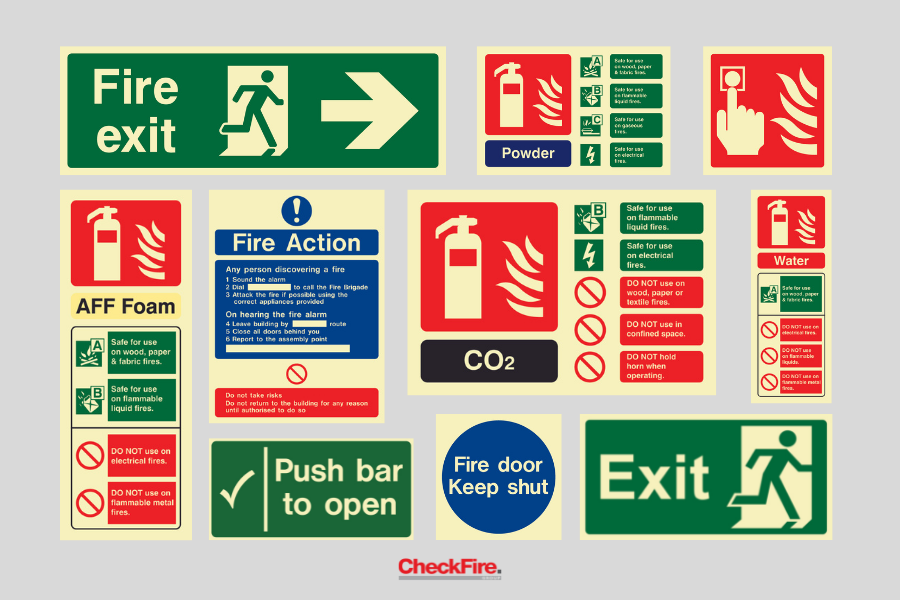
Fire safety signs help people find escape routes, locate equipment and recognise hazards. Standard colours and shapes support quick recognition, but people still need to understand the signs and the building's emergency plan. HSE guidance requires signs where significant workplace risks cannot otherwise be adequately controlled. This guide explains common UK sign categories, their placement and the relevant legal scope.
The fire safety sign colour code
Colours, shapes and pictograms work together. Recognising the categories is useful, but an unfamiliar symbol should be explained rather than assumed to be understood. The examples on this page illustrate common designs; they are not installation templates or a certification of a particular product.
- Green signs show safe conditions — escape routes, fire exits, assembly points and first aid.
- Red signs identify firefighting equipment or, with a diagonal slash, prohibit dangerous actions.
- Blue circular signs command a mandatory action, such as keeping a fire door shut.
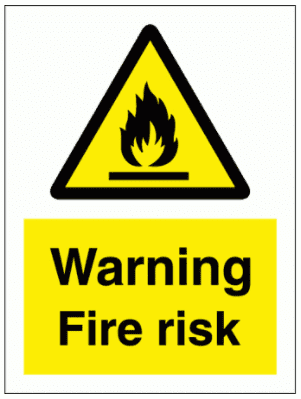
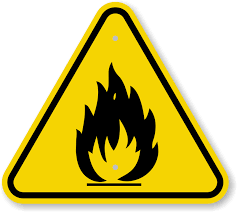
- Yellow triangular signs warn of a specific hazard, such as flammable materials.
- Contrast matters: green, blue and fire-equipment signs use white symbols; warning signs use black.
- Pictograms aid recognition across languages; explanation and suitable lighting still matter.
International symbol standards help make signs consistent, but designs and legal requirements are not identical everywhere. HSE specifically says employers should explain unfamiliar signs and the action employees need to take. Signs support induction and emergency training rather than replacing them.
Safe condition signs (green)
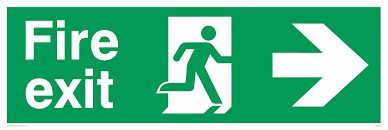
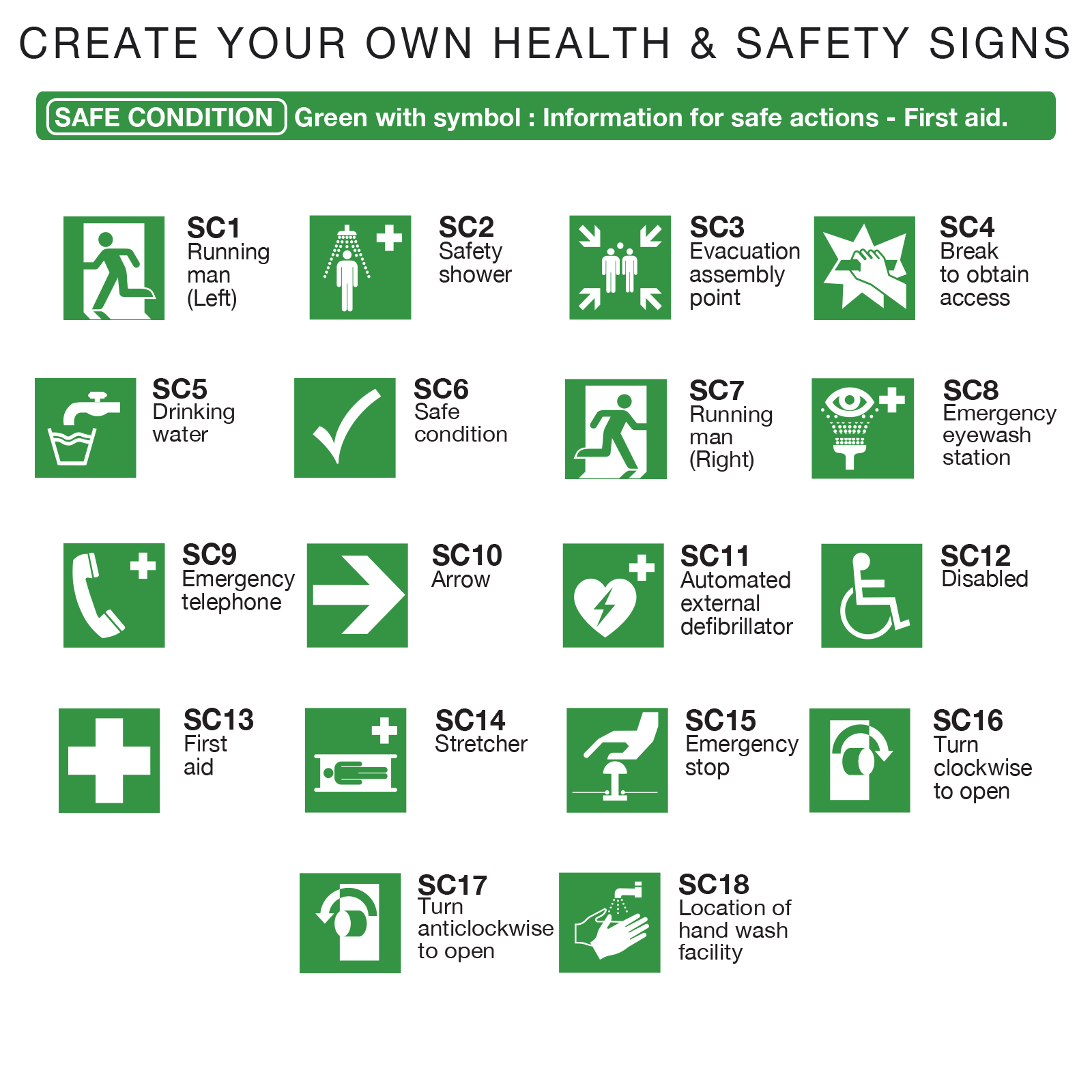
Safe-condition signs use a green background with white symbols. Fire-exit pictograms and directional arrows help identify the route to safety. Colour alone does not make a sign visible in darkness: lighting, position, size and the conditions in which it must be read all need consideration.
This category includes assembly points, first-aid locations and other safety facilities. The particular pictogram identifies the function. A green sign should not be treated as an instruction to use a route or facility without considering the building's emergency plan.
Fire equipment signs (red)
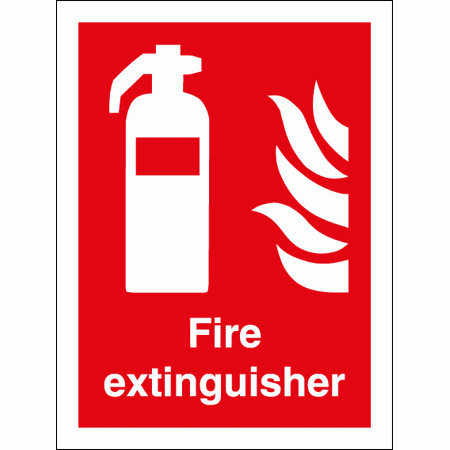
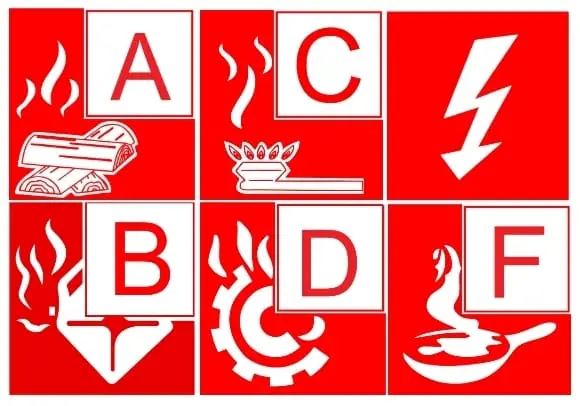
Fire-equipment signs normally use a red background with a white pictogram. They identify equipment such as an extinguisher, particularly where its location is not obvious. Size and position must suit the viewing distance and surroundings; there is no single two-metre visibility rule. Equipment instructions and ratings determine which extinguisher is suitable.
| Extinguisher class | Suitable for |
|---|---|
| Class A | Wood, paper, textiles |
| Class B | Flammable liquids |
| Class C | Flammable gases |
| Class D | Metals |
| Class F | Cooking oils |
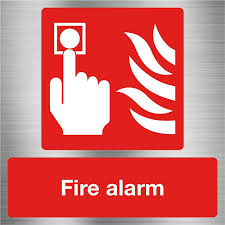
Fire alarm signs identify manual call points using the appropriate pictogram and any necessary instructions. Fire blankets and hose reels have their own equipment symbols. Keep signs and equipment unobstructed. A machinery emergency-stop control is a separate safety function and should not be confused with firefighting equipment.
Mandatory signs (blue)
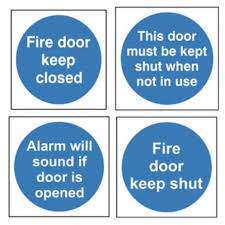
Mandatory-action signs use a blue circle with a white pictogram, sometimes accompanied by wording. Fire-door notices such as "Keep shut" or "Keep clear" must match how the particular door is intended to operate. A sign alone cannot make a damaged, obstructed or wedged-open fire door safe.
Fire-action notices describe the premises' actual procedure: raising the alarm, calling 999, evacuating and reporting at the assembly point. Ordinary lifts should not be used during a fire. Where a designated evacuation lift forms part of an assessed plan, the notice and staff instructions must reflect that arrangement.
Prohibition signs (red ring)
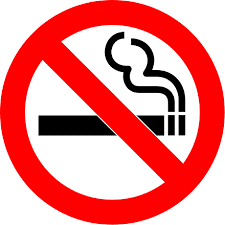
Prohibition signs have a red ring and diagonal bar, a white background and a black pictogram. Examples include no smoking and no naked flames. Use signs that address the actual risk and place them where the instruction can be seen before the prohibited action takes place. Lighting and legibility remain necessary.
Warning signs (yellow)
Warning signs use a yellow triangle with a black border and symbol. They can identify flammable material, an explosive atmosphere, hot surfaces or an electrical hazard. Choose the relevant symbol and a position where it gives useful warning before a person reaches the danger.
Escape routes and assembly points
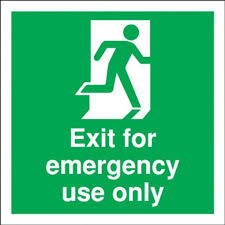
Escape signs should make the route clear where it is not otherwise obvious, including changes of direction and decision points. Their size and position must allow people to identify the correct route. Keep sight lines clear and review the arrangement after changes to partitions, storage or the escape plan.
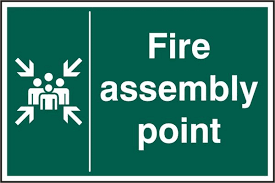
Assembly-point signs identify a safe gathering place clear of the building's hazards and fire-service access. The organisation's nominated people account for evacuees and report concerns to firefighters. Escape-route lighting and sign visibility must remain adequate where loss of normal lighting would create danger; emergency lighting needs follow the risk assessment.
Legal requirements and standards
Legal requirements and technical standards have different roles. The main provisions discussed here apply in Great Britain or England and Wales as specified; Northern Ireland has separate legislation.
The Regulatory Reform (Fire Safety) Order 2005 applies in England and Wales. Article 14 requires emergency routes and exits to be indicated by signs where necessary, and suitable emergency lighting where routes need illumination. The responsible person must arrange suitable precautions for the premises.
The Health and Safety (Safety Signs and Signals) Regulations 1996 apply in Great Britain. HSE's L64 guidance explains the categories, colours and shapes, together with visibility, maintenance and instruction. Signs supplement risk controls; they do not substitute for removing a hazard where that is possible.
BS EN ISO 7010 standardises registered safety symbols, while relevant parts of the BS 5499 series provide sign-selection and use guidance. The standard, sign size, position and lighting need to suit the application. Displaying a standards reference is not by itself proof that an entire workplace meets its fire-safety duties.
Best practice for signage
Place signs where they can be seen and understood at the point of need. Mounting height depends on the location, viewing distance and possible obstruction; exit signs may need to be above doors. Select normal and emergency illumination for the conditions identified in the fire risk assessment.
Inspect and maintain signs and any associated lighting under the premises' maintenance plan. Replace damaged or obscured signs and review them when layouts or routes change. Photoluminescent signs need suitable light exposure and must not be treated as an automatic substitute for required emergency lighting.
Use clear, consistent symbols with supplementary wording where needed, and avoid clutter that obscures essential instructions. Explain unfamiliar signs during training and show people the actual escape routes and assembly arrangements. Report missing, damaged or confusing signs so they can be corrected.
Make sure your team can read the signs and act fast in an emergency.
Explore the Fire Warden / Fire Marshal Course →Sources & references
- Regulatory Reform (Fire Safety) Order 2005 — current legislation
- HSE: when workplace safety signs are required
- HSE L64: Safety Signs and Signals Regulations guidance
- GOV.UK — Fire safety risk assessment: offices and shops

Mark writes about workplace fire safety, compliance and online training for Fire Marshal Training, part of Online CPD Academy.