
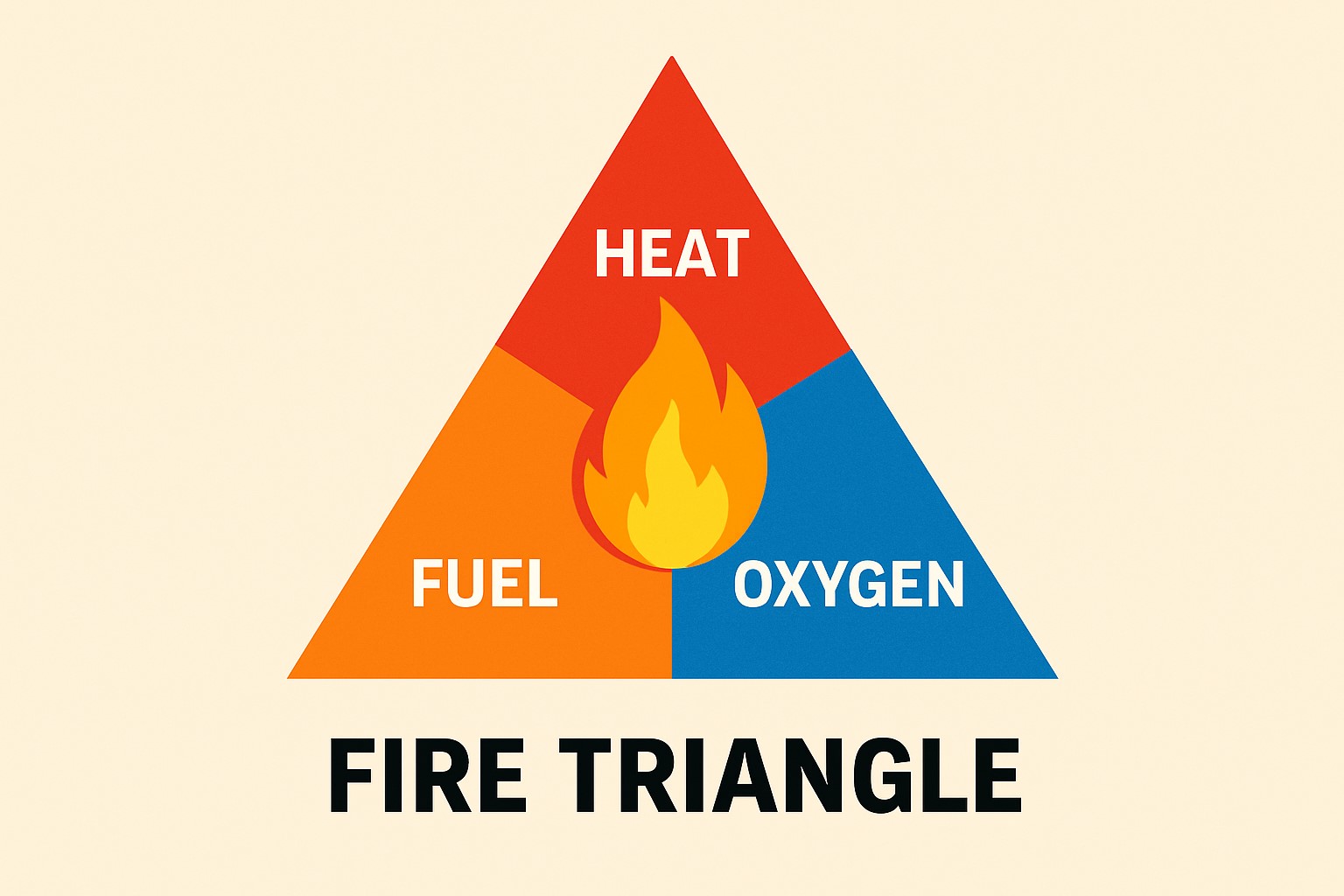
The fire triangle is a useful model for understanding many common fires: fuel, heat and oxygen sustain combustion. Cooling, removing fuel and excluding oxygen can interrupt that process, while some extinguishing agents also interrupt the chemical reaction. Understanding the science helps explain equipment selection; it does not make it safe to approach a fire. Raise the alarm, evacuate and call 999 before considering any trained, limited firefighting response.
Understanding combustion and the fire triangle
In ordinary fires, fuel reacts with oxygen and releases heat. The fire triangle describes three conditions that help the reaction continue. It is a simplified model; different fuels and chemical reactions need different controls.
- Fuel — anything that will burn: solids such as wood, paper and plastic; liquids such as petrol and oils; gases such as propane and methane; and certain metals such as magnesium.
- Heat — energy that starts or sustains burning, whether from a flame, hot surface, electrical fault or another source.
- Oxygen — usually supplied by the surrounding air; the conditions needed to sustain burning vary with the fuel.
Reducing heat, separating fuel or limiting oxygen can stop common forms of burning. NIST's fire-tetrahedron definition adds the continuing chemical chain reaction as a fourth factor. Use the model to understand prevention and equipment, not to improvise a firefighting method.
Three ways to extinguish a fire
Three familiar approaches are cooling, starvation and smothering. Equipment may combine these effects or interrupt the combustion reaction. The safe choice depends on the fuel, equipment rating and surroundings.
Cooling: removing the heat
Cooling removes heat from burning material. Water absorbs heat as it warms and evaporates, which makes it useful for suitable solid-material fires. Sprinklers and engineered water-mist systems have designs and applications of their own; their performance should not be inferred from a handheld water extinguisher.
Standard water extinguishers are intended for Class A solids such as wood, paper and textiles. Do not apply ordinary water to live electrical equipment, burning cooking oil or flammable liquids. This is a restriction on the agent and method, not a claim that all cooling techniques are unsuitable.
Starvation: removing the fuel
Starvation means interrupting a fuel supply. A designed emergency shut-off can help, but only operate it if you can do so safely and are authorised and trained. Do not approach a fire to move fuel or shut a valve. Extinguishing a gas flame while gas continues to leak can create an explosion hazard: evacuate and let emergency responders control the incident.
Smothering: removing the oxygen
Smothering limits oxygen contact with the fuel. Suitable foam can cover a liquid surface, and CO2 can reduce oxygen around a small fire. These methods have limitations: gases disperse, hot fuel may reignite, and some chemical reactions can continue within the material. Use only equipment selected for the hazard.
Selecting and using fire extinguishing equipment
An extinguisher must match both the burning material and the conditions. Read the rating and instructions, and use it only within your training and emergency plan. Avon Fire & Rescue Service's guide explains common UK types. The table below is a selection overview, not an instruction to tackle a fire.
| Fire class | Type of fuel | Typical extinguishing method |
|---|---|---|
| Class A | Ordinary combustibles — wood, paper, textiles, plastics | A-rated water or foam, according to label |
| Class B | Flammable liquids — petrol, oils, solvents | Suitable B-rated foam, CO2 or powder; follow label |
| Class C | Flammable gases — propane, butane, methane | Control fuel supply safely; specialist response if gas escapes |
| Class D | Combustible metals — e.g. magnesium; not lithium-ion batteries | Specialist agent matched to the particular metal |
| Electrical risk | Live electrical equipment | Suitable CO2; no standard water or foam on live equipment |
| Class F | Cooking oils and fats | Suitable F-rated equipment for trained users; evacuate home pan fires |
When to use a fire blanket
A fire blanket is safety equipment with a defined application and instructions; it is not a reason to lean over a burning pan. London Fire Brigade advises against tackling pan fires at home. Get out and call 999. In workplaces, any blanket provision and use should follow the risk assessment, manufacturer's instructions and practical training.
Tackling flammable liquids
A standard water jet can spread burning liquid. A suitable Class B extinguisher may be selected for a small, contained liquid fire, but fuels differ and some agents are unsuitable for particular liquids. Free-flowing liquid fires need specialist equipment and training, as explained in government workplace guidance.
Dealing with electrical fires
Raise the alarm and leave danger first. Isolate electrical equipment only if this can be done safely, within your role, without approaching the fire or delaying escape. Switching off the mains does not necessarily remove stored energy in batteries or other components. CO2 may suit a small live-equipment fire, but only for a trained person with a safe escape route. Do not attempt to fight a failing lithium-ion battery: fire-service advice is to get out and call 999.
Fire safety measures and prevention
Stopping combustion is the last line of defence — preventing it is far better. A few measures make the biggest difference in any workplace or home:
- Fire alarms and prompt alerts. Suitable, maintained detection and alarms provide warning so people can start their evacuation plan promptly.
- Fire risk assessment. For premises within the Fire Safety Order in England and Wales, the responsible person must assess fire risks and keep the assessment up to date. Scotland and Northern Ireland have their own legislation.
- Good housekeeping. Keeping combustible materials away from heat sources, maintaining electrical equipment, storing flammable liquids safely and keeping escape routes clear all reduce the chance of a fire starting and spreading.
- Trained staff. Employees need instructions appropriate to their work and the premises. Fire wardens need additional role-specific preparation; evacuation remains the priority, and not every employee is expected to fight fires.
Key takeaways
Cooling removes heat, starvation interrupts fuel, and smothering limits oxygen contact. Some agents also interrupt the chemical chain reaction. Match equipment to the fuel and its label, and never let an attempt delay escape. Preventing ignition, maintaining alarms and practising the evacuation plan are the practical starting points.
Build understanding of fire behaviour online, alongside site procedures and any practical extinguisher training your team requires.
Explore the Fire Warden / Fire Marshal Course →Sources & references
- NIST — Fire tetrahedron definition
- Avon Fire & Rescue Service — Fire extinguisher types and limitations
- London Fire Brigade — What to do if a pan catches fire
- GOV.UK — Fire safety risk assessment: offices and shops
- Devon & Somerset Fire & Rescue Service — Lithium battery fires
- Regulatory Reform (Fire Safety) Order 2005 — current legislation

Mark writes about workplace fire safety, compliance and online training for Fire Marshal Training, part of Online CPD Academy.