
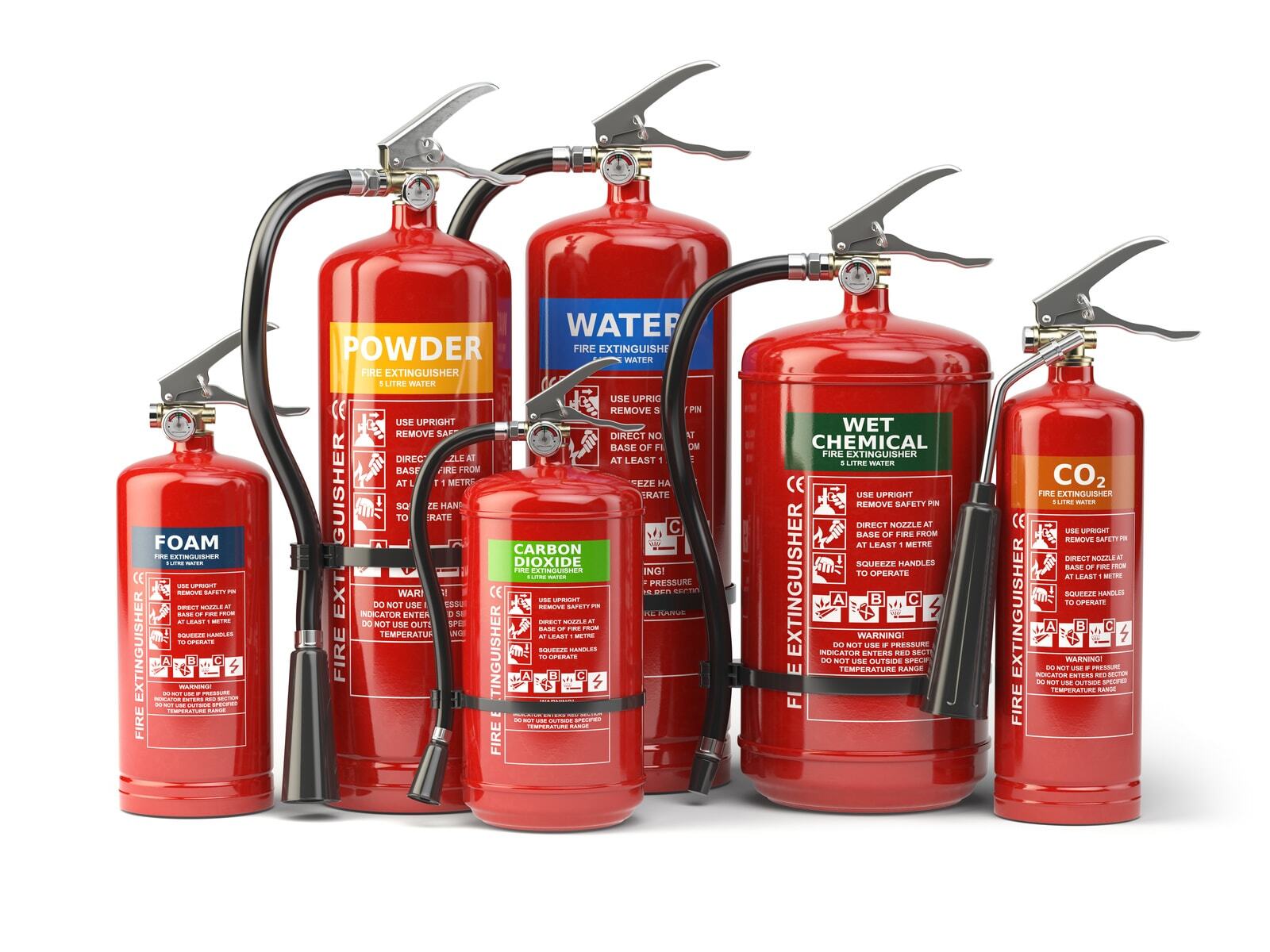
Water, foam, CO2, dry powder and wet chemical are five common portable extinguisher types used in UK workplaces. They suit different fuels and risks: choosing the wrong one can make a fire worse. This guide explains the colours, fire classes and limitations, alongside the PASS reminder. In an emergency, raise the alarm, get people to safety and call 999. Only trained people should consider tackling a small fire with suitable equipment and a clear escape route.
Understanding fire classes
Fire classes describe the burning material. An extinguisher's label shows its tested rating and operating restrictions; colour alone is not enough to select it. The following categories use the UK classification system.
- Class A — ordinary combustible solids such as wood, paper, fabric and furniture.
- Class B — flammable liquids such as petrol, solvents and some paints; cooking oils and fats are Class F.
- Class C — flammable gases including methane, propane and butane.
- Class D — flammable metals such as magnesium, aluminium powder and potassium.
- Class F — cooking oils and fats, typically in deep-fat fryers and chip pans.
- Electrical — fires involving live electrical equipment, treated separately because of the shock risk.
Live electrical equipment creates an additional shock hazard, rather than a separate lettered UK fire class. CO2 is commonly used for this risk. Standard water and foam extinguishers should not be used on live electrical equipment. Metal fires need an agent selected for the particular metal.
The five extinguisher types at a glance
Modern portable extinguishers commonly have red bodies and an identification colour on their label or band. The table is an introduction to the five familiar types. Always read the complete label, including its fire rating and electrical restrictions, and follow your workplace fire risk assessment.
| Extinguisher | Label colour | Fire classes | Do not use on |
|---|---|---|---|
| Water | Red (label) | A | B, C, D, F and live electrical equipment |
| Foam | Cream | A, B | C, D, F and live electrical equipment |
| CO2 | Black | B; suitable live electrical equipment | A, C, D and F |
| Dry powder | Blue | ABC powder: A, B, C; electrical suitability per label* | D, F; generally unsuitable for enclosed spaces |
| Wet chemical | Yellow | F; A only where rated | Risks outside the stated rating; live electrical equipment |
*Powder formulations differ: ABC and BC powder are not interchangeable with specialist metal-fire agents. Gas fires require control of the gas supply, not simply extinguishing the flame. Water mist and other specialist products also exist, but their suitability depends on the individual product's rating and instructions.
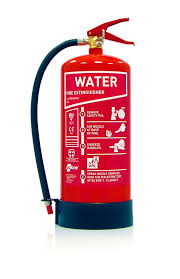
Water extinguishers
Standard water extinguishers use a red identification colour and tackle Class A solids such as wood and paper. They mainly remove heat from the burning material. A fire can still reignite if hot material remains, so visible flame extinction does not establish that the area is safe.
Water-based units are often selected for ordinary combustible materials in offices, schools and other workplaces. Capacity alone does not establish performance: compare the fire rating on the label and have the equipment selected for the premises and its hazards.
Do not use a standard water extinguisher on live electrical equipment, flammable liquids, gases, metals or cooking oils and fats. Water applied to burning oil can violently spread the fire. Specialist water-based products have their own ratings and restrictions; do not assume they share the same capabilities.
Foam extinguishers
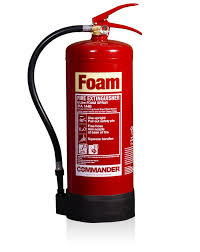
Foam extinguishers have a cream identification colour and commonly cover Classes A and B. Their water content cools, while foam can form a covering over a suitable liquid fuel. The particular foam must be appropriate for the fuel and used as directed; not every foam suits every flammable liquid.
Foam is not a general solution for gas, metal, cooking-oil or live-electrical fires. An electrical test marking is not permission to ignore the manufacturer's restrictions. Government workplace fire guidance also cautions that free-flowing liquid fires need specialist training and equipment.
CO2 extinguishers
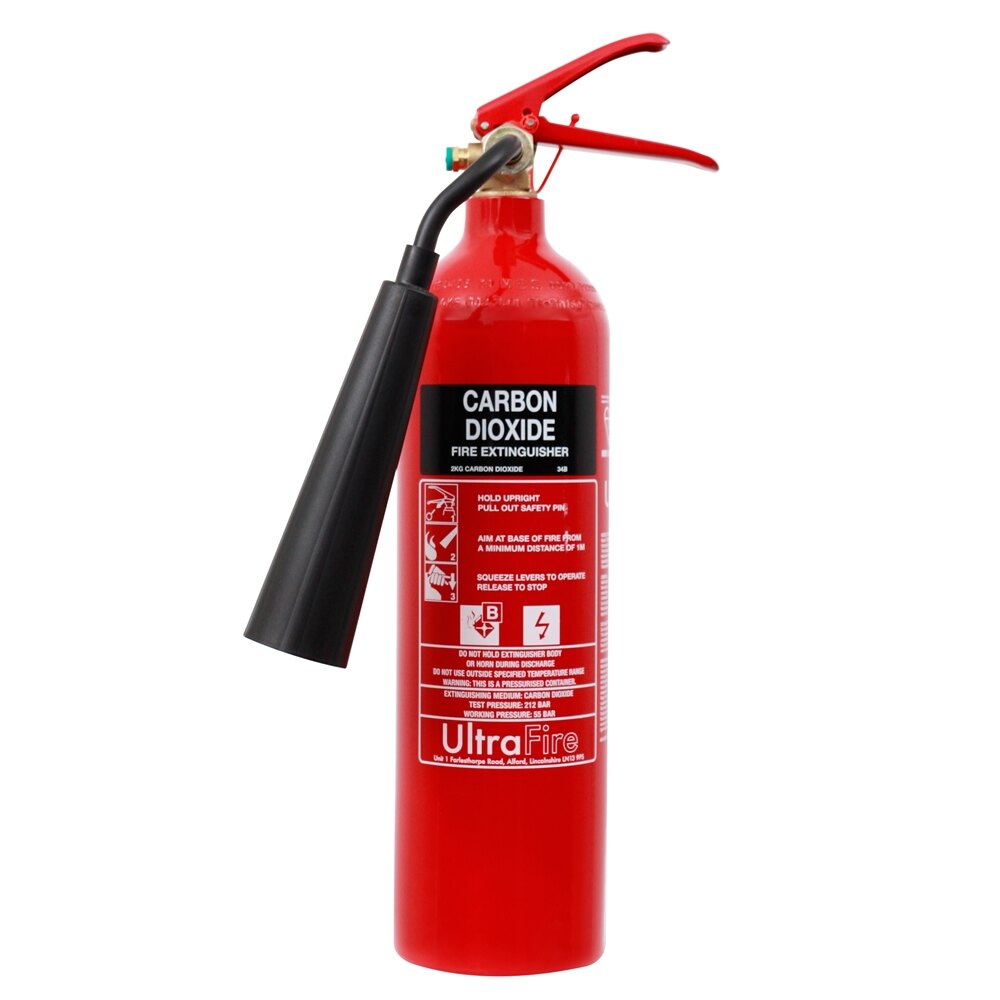
CO2 extinguishers have a black identification colour. They are used for suitable Class B fires and live electrical equipment, releasing carbon dioxide around the fire. CO2 leaves no extinguishing residue, but provides limited cooling and may disperse quickly, particularly outdoors.
CO2 is unsuitable for deep-fat cooking fires and can allow hot solid material to reignite. Discharge parts can become dangerously cold: hold only the designated insulated grip specified by the manufacturer. The gas can create an asphyxiation risk in confined spaces. Do not enter or remain in a hazardous atmosphere to operate an extinguisher.
Dry powder extinguishers
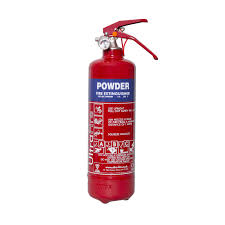
Dry powder extinguishers have a blue identification colour. Standard ABC products can tackle the stated A, B and C risks; check the label for electrical suitability. Powder interrupts the combustion reaction but has limited cooling effect, so reignition remains possible.
Specialist powders are selected for particular metal fires; a product suitable for one metal may be unsuitable for another. A rechargeable lithium-ion battery fire is not the same as a lithium-metal fire. Do not select a Class D extinguisher merely because a device contains a lithium-ion battery.
Powder can obscure escape routes and affect breathing, so government guidance says it is generally unsuitable for enclosed spaces. It also contaminates equipment. Standard ABC powder is not a cooking-oil extinguisher. A burning gas leak should not be extinguished while the fuel continues to escape; evacuate and leave control of the incident to the fire service.
Wet chemical extinguishers
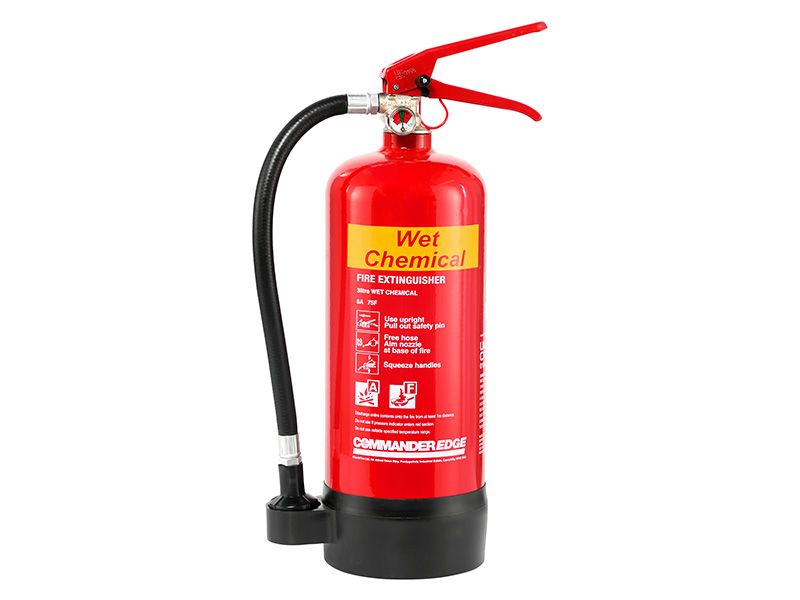
Wet chemical extinguishers have a yellow identification colour and are designed for Class F cooking oils and fats. They cool the oil and create a surface layer that limits oxygen contact. Some also have a Class A rating; use only the capabilities stated on the label.
Commercial kitchens need equipment chosen for their appliances and cooking-oil risks. Trained staff must follow the specific extinguisher's application method and distance, rather than a general rule. At home, London Fire Brigade advises against tackling a pan fire: get out and call 999.
How to use an extinguisher: PASS
PASS is a useful reminder for many portable extinguishers, but it does not replace training or the product instructions. Foam and wet chemical units can need different application techniques. Raise the alarm and ensure 999 has been called before any attempt; leave if smoke, spreading fire or doubt makes an attempt unsafe.
- P — Pull the safety pin, breaking the tamper seal.
- A — Aim as directed for the agent and burning material, usually low at the fuel.
- S — Squeeze the handle slowly and steadily to release the agent.
- S — Sweep as directed by your training and the extinguisher instructions.
Discharge duration varies by model. Keep your escape route available and withdraw immediately if the attempt is not controlling the fire, the extinguisher runs out or conditions worsen. Do not re-enter to check for hot spots or collect another unit. Tell firefighters what happened, even if visible flames have stopped.
Selection, placement and maintenance
Selection starts with the fire risk assessment. A competent person should specify suitable types, ratings, quantities and accessible positions for the actual risks. Floor area alone cannot determine the complete provision. The Fire Safety Order applies in England and Wales; Scotland and Northern Ireland have separate legislation. Extinguishers must not obstruct escape routes.
Check extinguishers regularly for accessibility, damage, tampering and any pressure indicator, following the maintenance plan. Fire-service guidance recommends servicing at least annually, or as specified by the manufacturer. Additional servicing and replacement intervals depend on the product. After any discharge, arrange replacement or competent servicing; do not return a partly used unit to service.
Build your team’s extinguisher knowledge online, alongside the equipment-specific instruction and practical training their workplace requires.
Explore the Fire Warden / Fire Marshal Course →Sources & references
- Avon Fire & Rescue Service — Fire extinguisher types and limitations
- GOV.UK — Fire safety risk assessment: offices and shops
- London Fire Brigade — What to do if a pan catches fire
- Regulatory Reform (Fire Safety) Order 2005 — current legislation
- Scottish Fire and Rescue Service — Business guidance and extinguisher safety

Mark writes about workplace fire safety, compliance and online training for Fire Marshal Training, part of Online CPD Academy.