
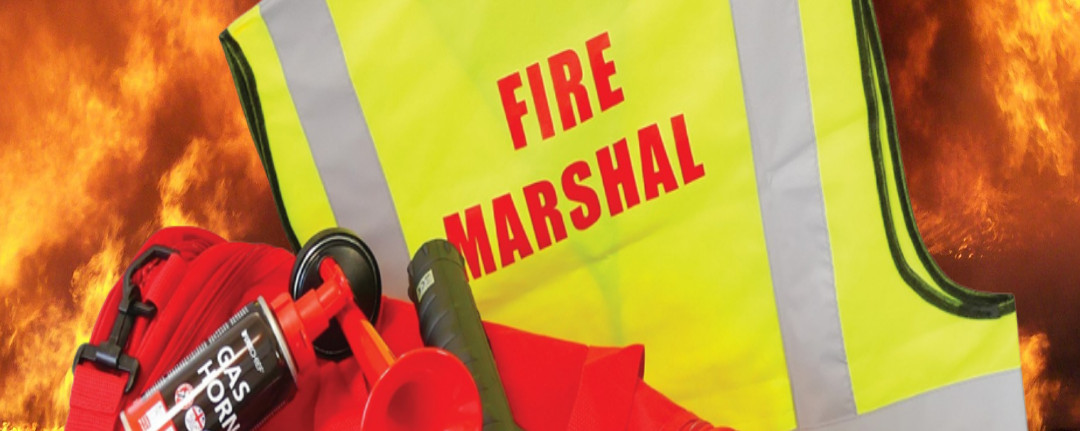
Fire marshals support workplace fire safety through the responsibilities assigned to them. Depending on the premises, these may include reporting hazards, routine checks, helping colleagues understand procedures and supporting evacuation. Their role forms part of the organisation’s wider fire safety arrangements.
This guide explains how fire marshals or wardens support workplace prevention and emergency procedures. References to the Fire Safety Order concern England and Wales; Scotland and Northern Ireland have separate legislation. The responsible person retains their duties, while the marshal’s tasks must match their training and the premises’ emergency plan.
Core fire marshal responsibilities
A fire marshal's primary job is to reduce the chance of a fire starting and to make sure everyone can get out safely if one does. In practice this means a mix of routine checks, hazard awareness and emergency readiness.
Fire hazard identification. Assigned walk-rounds can identify overloaded sockets, obstructed escape routes, wedged-open fire doors, combustible waste and ignition sources near flammable materials. Report hazards promptly and follow the site’s arrangements for corrective action.
Fire risk assessment support. The responsible person must arrange the fire risk assessment and act on its findings; appointing marshals does not transfer that duty. Marshals can contribute practical observations about escape routes, working arrangements and defects. A person may hold both roles, but must understand and have the competence for each.
Compliance and enforcement. Marshals help keep the workplace aligned with fire safety policy day to day: making sure exits stay unlocked and unobstructed, fire notices remain visible, and that colleagues follow the agreed procedures.
Fire safety inspections and equipment management
Routine checks help identify missing equipment, damage or obstructions. A marshal should only test or work on equipment where trained and authorised for that task; servicing and repairs require the appropriate competence. Report faults promptly and follow the premises’ maintenance arrangements.
Fire safety equipment checks. Marshals can make assigned visual checks that extinguishers and fire blankets are accessible, correctly located and have no obvious damage or overdue maintenance. Check that fire doors operate as intended, including closers and latches where fitted, and report defects for competent attention.
Testing alarms and detection systems. While formal alarm testing is usually arranged by facilities or a competent contractor, marshals are often involved in weekly call-point tests and in making sure detectors are not obstructed or damaged.
Emergency lighting and exits. Check that escape routes and exit signs remain visible and unobstructed, and that escape doors can be used as intended. Report obvious lighting defects; formal emergency-lighting tests should follow the site’s arrangements and be carried out by people competent for the task.
Fire prevention and risk reduction strategies
Prevention is always better than response. Much of a marshal's value lies in stopping the conditions that lead to fire from ever developing.
Fire safety protocols. Marshals help embed safe-working habits — good housekeeping, keeping escape routes clear, and following procedures for high-risk activities such as hot work.
Control of hazardous materials. Flammable liquids, gases and combustible waste should be stored correctly and in suitable quantities. Marshals monitor storage and flag anything that increases the fire load unnecessarily.
Electrical safety. Marshals look for damaged leads, overloaded sockets, signs of overheating and equipment used contrary to instructions. Report concerns for competent inspection and action; a visual check cannot establish that an installation is electrically safe.
Fire marshal role during emergencies
When the alarm sounds, the fire marshal switches into a clearly defined emergency role. Wearing a high-visibility tabard so they can be easily identified, they take charge of getting their area out safely.
Emergency response procedures. Follow the site plan. Where a safe check of the designated area forms part of the role, make it while leaving and without delaying escape. Do not enter smoke, approach the fire, open a suspect door or re-enter to search. Close doors if safe and report any areas not checked and anyone unaccounted for.
Guiding safe evacuation. They direct people calmly to the nearest safe exit, assist anyone who needs help, and ensure Personal Emergency Evacuation Plans (PEEPs) are followed for those who require them.
Fire extinguisher use on small fires. Raise the alarm and ensure the emergency services are called as required by the plan. Only use an extinguisher if trained, the equipment is suitable and a safe escape remains available. Do not delay evacuation or take personal risks. If uncertain, leave, stay out and call 999.
| Extinguisher type | Best for | Not suitable for |
|---|---|---|
| Water | Class A solids such as paper, wood and textiles | Flammable liquids, live electrical equipment, cooking oils |
| CO₂ | Suitable Class B fires and live electrical equipment, as labelled | Class A solids and cooking oils; confined spaces need particular caution |
| Foam | Class A and suitable Class B fires, as labelled | Cooking oils; live electrical equipment unless specifically suitable |
| ABC powder | Class A, B and C risks where specified | Cooking oils and metal fires; generally unsuitable in enclosed occupied spaces |
Training, drills and staff education
Fire marshals are not only trained themselves — they help keep the whole workforce prepared.
Organising fire drills. Regular evacuation drills test the plan, build muscle memory and reveal problems before a real emergency. Marshals help run these, time the evacuation and feed back on what needs to improve.
Delivering fire safety awareness. Marshals reinforce the basics with colleagues — what the alarm sounds like, where the exits and assembly points are, and what to do (and not do) when the alarm sounds.
New starter induction and refreshers. Training must fit the marshal’s duties and the building’s procedures. Cover alarms, escape routes, assistance arrangements, reporting and any authorised equipment use. The law does not prescribe a single course duration, certificate or three-year refresher interval. Repeat and update training as needed to maintain competence, including after relevant changes.
Documentation, reporting and regulatory duties
Good record-keeping helps track precautions, defects and action taken. Marshals can contribute the day-to-day detail to the responsible person’s records; documentation alone does not establish that the premises are safe or compliant.
Maintaining fire safety records. Logs of equipment checks, drills, training and identified hazards form an evidence trail that an inspector — or an insurer after an incident — will expect to see.
Incident investigation and reporting. After any incident or near miss, marshals report their evacuation findings to management and the emergency services, document who was accounted for, note any equipment failures or procedural issues, and record any injuries or assistance provided to vulnerable people. This supports post-incident reviews and any insurance claim.
Keep an organised record of drills, training, checks, faults and remedial action. Set retention periods using applicable legal, contractual and insurance requirements, the building’s needs and data-protection obligations. The Fire Safety Order does not prescribe the suggested blanket three-, five- or ten-year retention periods for these different records.
Frequently asked questions
What are the main duties of a fire marshal in the workplace?
Assigned duties may include visual checks of escape routes, doors and equipment, reporting hazards, helping staff understand procedures and supporting drills. Only test equipment where trained and authorised. During an emergency, follow the plan, guide people to safety and report missing people or unchecked areas. Provide evacuation assistance only within the planned and practised arrangements.
How do fire marshals contribute to the fire risk assessment?
Marshals can identify hazards and practical problems, check that assigned precautions remain in place and report concerns. The responsible person retains the duty to arrange a suitable assessment and implement precautions; appointing a marshal does not transfer that responsibility.
What role does a fire marshal play in maintaining fire safety equipment?
Carry out assigned visual checks, report faults and leave servicing or repairs to people competent for the work. Equipment use during a fire requires appropriate training, a suitable extinguisher and a safe escape route; evacuation takes priority.
What training is required to become a fire marshal?
Provide training suited to the assigned duties and site procedures, and refresh it when needed to maintain competence. There is no universal statutory course length, named certificate or three-year refresher rule. Training should include alarms, evacuation, assistance arrangements and any authorised equipment use.
How does a fire marshal coordinate evacuation during an emergency?
Follow the site plan, direct people towards a safe exit and report to the designated coordinator. Any area check must be safe and must not delay escape. Report missing persons and unchecked areas; never enter smoke or re-enter to search.
What are a fire marshal's reporting obligations after an incident?
They report evacuation findings to management and the emergency services, document who was accounted for, and note any equipment failures or procedural issues. They also record injuries and any assistance provided to vulnerable persons, supporting post-incident reviews and insurance claims.
Build your fire marshal knowledge with online training, supported by the procedures and practical instruction for your workplace.
Explore the Fire Warden / Fire Marshal Course →Sources & references
- GOV.UK — Competent assistance and emergency procedures
- GOV.UK — Workplace fire safety equipment, drills and training
- Dorset & Wiltshire Fire and Rescue Service — Extinguishers
- Regulatory Reform (Fire Safety) Order 2005 — current legislation

Mark writes about workplace fire safety, compliance and online training for Fire Marshal Training, part of Online CPD Academy.